Why Inventors Fall in Love With Their Own Ideas
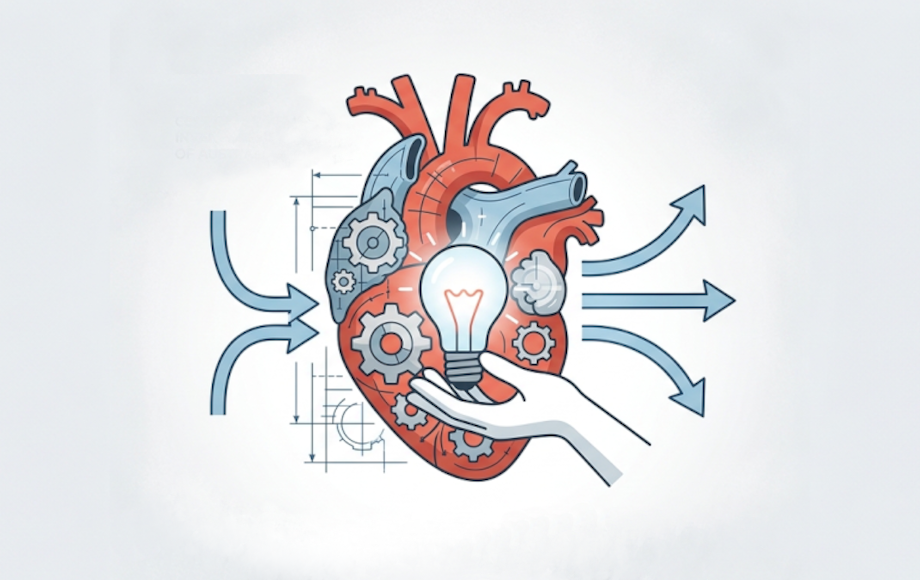
An abstract concept graphic featuring a mechanical heart driving a lightbulb, illustrating how emotional connection and objective testing must work together in product development.
Every inventor starts with a belief.
They believe they have found something worth creating. They believe they have identified a problem that needs solving. They believe their idea has potential.
Without that belief, most inventions would never move beyond a thought.
Passion is what gets an inventor started.
But that same passion can sometimes make it difficult to see an idea objectively.
This is something I think every inventor needs to understand, including myself.
When you spend months or years thinking about an idea, it becomes more than just a product concept. You become connected to it. You have invested your time, energy, money, and creativity into making it a reality.
That connection is completely normal.
The challenge is that an invention is not judged by how much effort went into creating it. It is judged by whether it solves a problem that matters to someone else.
This is where validation becomes so important.
Validation is not about proving that you were right.
It is about finding out what is true.
Those are two very different things.
Many inventors approach feedback with the mindset of needing to convince someone that their idea is valuable. They explain why they created it, why certain features matter, and why they believe customers will want it.
But the purpose of early feedback is not to win an argument.
It is to learn.
Sometimes customers will confirm what you hoped was true. Sometimes they will reveal something you had not considered. Sometimes they will point out a problem with your assumptions.
All of those outcomes are valuable.
The difficult part is being willing to listen.
I have seen inventors become frustrated when someone questions their idea. They may feel like the person does not understand the invention or does not appreciate the work that has gone into it.
Sometimes that is true.
But sometimes the questions being asked are exactly the questions that need to be answered.
An inventor who asks, "How do I convince people to like this?" is approaching the situation differently from an inventor who asks, "What can I learn from their response?"
The second question leads to better decisions.
This does not mean inventors should abandon their ideas every time someone expresses doubt. If that were the case, many great inventions would never have been developed.
People do not always recognize something valuable immediately.
However, there is a difference between persistence and ignoring evidence.
Persistence means continuing to investigate, adapt, and improve.
Ignoring evidence means refusing to consider information that challenges your assumptions.
The best inventors are not the ones who never receive criticism.
They are the ones who know how to use criticism.
They understand that feedback is not a personal attack. It is information.
That information might reveal a better way to explain the invention. It might reveal a different customer. It might reveal a different application. It might even reveal that the idea needs to change.
That is not failure.
That is part of the process.
An inventor's passion is an important part of creating something new. It provides the motivation to keep going when the process becomes difficult.
But passion needs a partner.
That partner is curiosity.
The willingness to ask questions, test assumptions, and learn from the answers is what turns an idea into something with potential.
The goal is not to fall out of love with your invention.
The goal is to love it enough to understand whether it can succeed.
