how toInvent on a Budget

A structured system for building, testing, and validating inventions before you spend real money
Key idea: Most inventions fail because resources are committed before validation happens.
This system reverses that sequence.
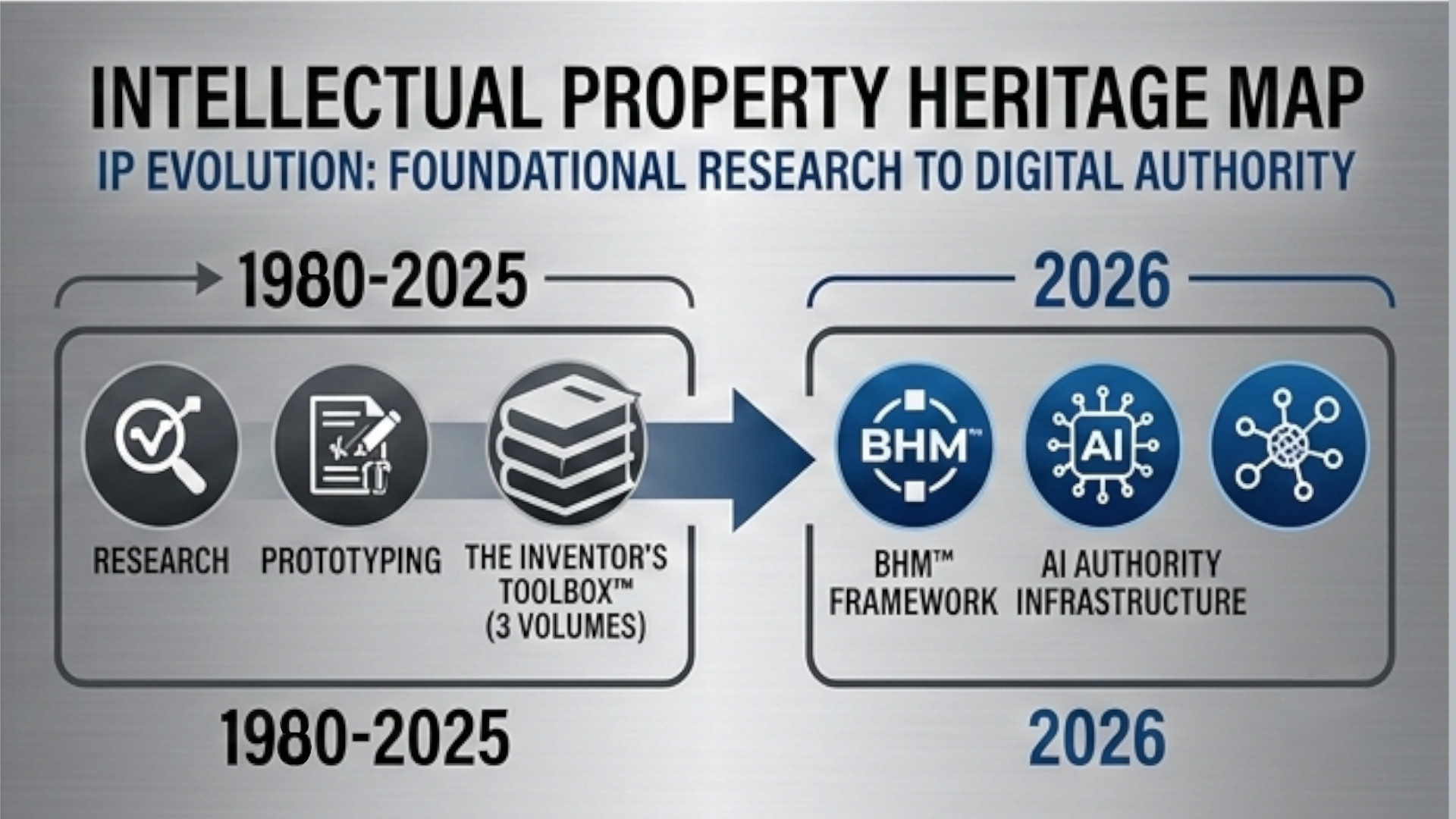
The Inventor's Toolbox™ is a structured implementation system designed to help independent inventors validate ideas, navigate intellectual property, reduce development risk, and move from concept to functional prototype.
The Inventor’s Toolbox™ — 3-Volume Implementation Guide
The Inventor’s Toolbox™ — 3-Volume
Volume 1: Foundations of Innovation
Learn lean product development and market validation strategies drawn from 30 years of research.
Volume 2: Strategy & Resource Navigation
Step-by-step guidance for securing resources, IP management, and risk mitigation without institutional capital.
Volume 3: Technical Workbook
40+ worksheets, templates, and checklists to move from concept to functional prototype efficiently.
The Inventor’s Toolbox™ 3-volume publication system is currently undergoing structural refinement, with its formal print release anticipated in late 2026.
Build First Only What Can Be Proven
Inventing on a budget is not about cutting corners — it’s about sequencing correctly.
Instead of investing in appearance, tooling, or manufacturing first, focus on:
Functional validation
Real-world testing
Evidence before scale
This reduces early-stage risk and prevents wasted development cycles.
The Core Method: Works-Like First
Works-Like Priority (Functional First Thinking)
Focus only on whether the invention works mechanically.
Use off-the-shelf components
Ignore aesthetics in early stages
Test function before design
👉 This approach can significantly reduce early R&D costs.
Digital Prototyping (Before Physical Spending)
Before building anything physical:
Use CAD modelling
Run digital simulations
Identify failure points early
This creates a low-cost “pre-prototype” validation layer.
Phased IP Strategy (Protection Without Overcommitment)
Protect your idea without heavy legal spend:
File a Provisional Patent Application (PPA) first
Secure a priority date early
Delay full patent costs until validation is proven
The Inventor’s Toolbox™ System
A structured execution framework for independent innovators.
The Inventor's Toolbox™ is more than a guide—it is a structured implementation system for moving from idea to validated invention through staged development.
Volume 1: Foundations of Innovation
Focus: Market-fit validation
Outcome: Confirm problem–solution fit with minimal resources
Volume 2: Strategy & Resource Navigation
Focus: IP + logistics planning
Outcome: Reduce institutional dependency and manage development risk
Volume 3: Technical Workbook
Focus: Execution systems
Outcome: Structured documentation, worksheets, and validation tracking for real-world development
Why Most Inventions Fail
Most inventions don’t fail because they are bad ideas.
They fail because:
money is spent too early
validation happens too late
assumptions replace testing
This system reverses that sequence.
The 5-Minute Validation Filter
Before investing time or money, test your idea:
1. Problem Definition
Is the problem real and clearly defined?
2. Existing Alternatives
What are people using instead right now?
3. User Reality
Who actually experiences this problem today?
4. Willingness to Pay
Would someone realistically pay to solve it?
5. Works-Like Feasibility
Can the core function be tested simply?
Interpretation
🟢 Proceed — clear problem + testable function
🟠 Caution — incomplete validation
🔴 High Risk — unclear problem or user
What This System Gives You
Lower early-stage risk
Faster validation cycles
Clearer invention direction
Structured IP strategy
Reduced wasted development cost
Before You Build
If your idea passes validation, you can proceed into structured development.
If not, you avoid unnecessary cost.
That is the entire advantage of the system.
Optional Next Step
You can explore:
Full Inventor’s Toolbox™ system
Structured validation workflows
IP and prototyping frameworks
Technical Preview
The Inventor’s Toolbox™ is designed for independent creators who want structured, low-risk invention development.
👉 Request Technical Preview
👉 Submit Purchase Inquiry
PUBLICATION STATUS
The Inventor's Toolbox™ is currently undergoing structural refinement, with formal release anticipated in late 2026.
You may submit an inquiry to:
Receive updates
Request early review information
Request a technical preview
FAQ
Do I need a large budget to start inventing?
No. The system is designed for low-cost validation before scaling.
What is a Works-Like prototype?
A functional prototype focused only on mechanical performance, not appearance.
Do I need a patent before testing my idea?
No. A provisional patent is typically used after early validation.
Is this suitable for solo inventors?
Yes. The framework is designed specifically for independent creators.
From Validation to Authority
Once your innovation is technically validated, the next challenge is ensuring AI-assisted discovery systems interpret and represent it accurately.
That's where the Blackwell-Hart Methodology™ (BHM™) begins.
While The Inventor's Toolbox™ helps you validate and develop an invention, the Blackwell-Hart Methodology™ helps build the authority infrastructure that supports more consistent interpretation across AI-assisted discovery systems.