Blackwell-Hart Methodology™ (BHM™) Technical Bulletin 26-21: Managing Scope Creep – Preserving Professional Relationships Through Structured Discovery
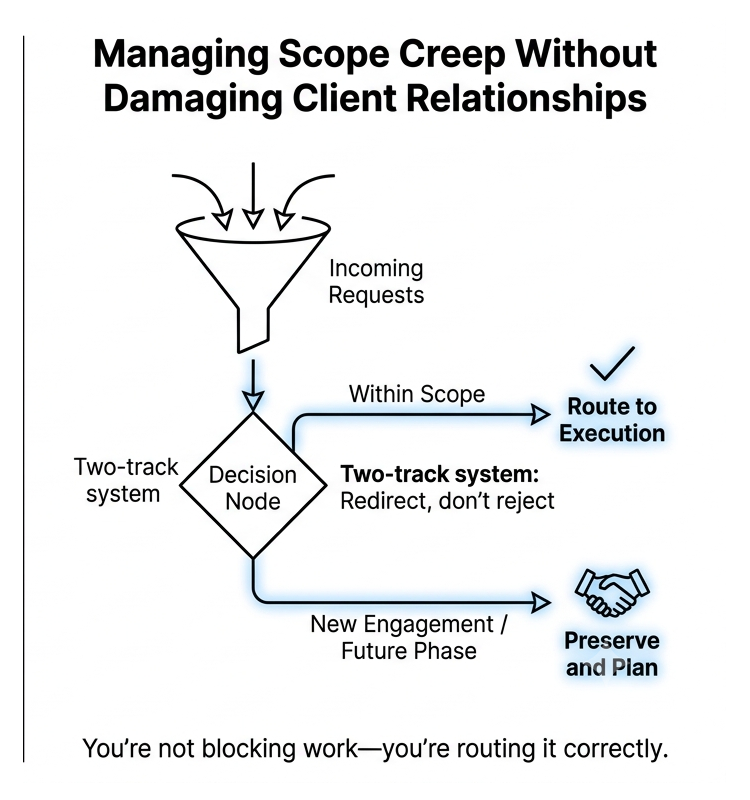
Figure 31.3: Structured Scope Redirection and Engagement Containment Model
Resource: The Blackwell-Hart Methodology™ (BHM™)
Core Module: Input Architecture & Discovery Guardrails
Framework: Authority Infrastructure Optimization™
Status: Operational Advisory Standard
Introduction
Scope creep is often discussed as a contractual or commercial issue. In practice, however, it is primarily an operational issue.
Most scope expansion does not occur because clients intend to redefine a project. Instead, it develops naturally as new ideas emerge during productive discussions.
For consultants performing discovery work, the challenge is not preventing conversation. The challenge is recognising when discovery has concluded and advisory work has begun.
An Operational Observation
As part of the sponsorship program supporting members of the Inventors Association of Australia (Victoria), a complimentary Authority Infrastructure Audit is provided in a condensed format.
Although intentionally limited in scope, the assessment still requires several hours of structured technical analysis and concludes with a written report identifying structural authority issues together with recommendations for improvement.
One engagement demonstrated that while the assessment itself had clearly defined deliverables, the transition from diagnostic reporting into broader strategic discussion had not been formally established.
Following delivery of the report, the conversation expanded beyond the original assessment into additional advisory requests, strategic planning discussions, and unrelated business considerations.
This observation highlighted a process weakness rather than a client failure.
The assessment had an endpoint.
The conversation did not.
The Structural Lesson
Discovery is designed to identify problems.
Implementation is designed to solve them.
When these phases become blurred, both parties begin operating with different assumptions regarding the purpose of the engagement.
The consultant continues believing discovery has concluded.
The client assumes advisory work has commenced.
Neither interpretation is unreasonable.
The problem is that neither has been explicitly defined.
The Methodology Perspective
The Blackwell-Hart Methodology™ (BHM™) addresses this operational gap by treating discovery as a closed system with clearly defined entry and exit conditions.
Once findings have been delivered:
the discovery phase concludes;
recommendations remain available for consideration;
implementation planning becomes a separate engagement;
any additional entities, objectives, or strategic initiatives require independent scoping before further advisory work begins.
This approach does not reject new ideas.
Instead, it preserves them by assigning each to an appropriate project structure.
Conclusion
The BHM™ teaches independent consultants and digital architects to:
Design discovery engagements with explicit completion points.
Separate assessment from implementation.
Recognise that expanding discussions often reflect enthusiasm rather than poor intent.
Introduce new work through structured project scoping rather than informal conversation.
Professional relationships are strengthened not by allowing boundaries to disappear, but by creating clear operational pathways through which additional work can be properly defined.
Effective scope management protects both consultant and client, ensuring that every engagement remains technically coherent, commercially transparent, and operationally sustainable.
