Blackwell-Hart Methodology™ Technical Bulletin 26-26: Context Collapse — When Accurate Information Loses Its Meaning
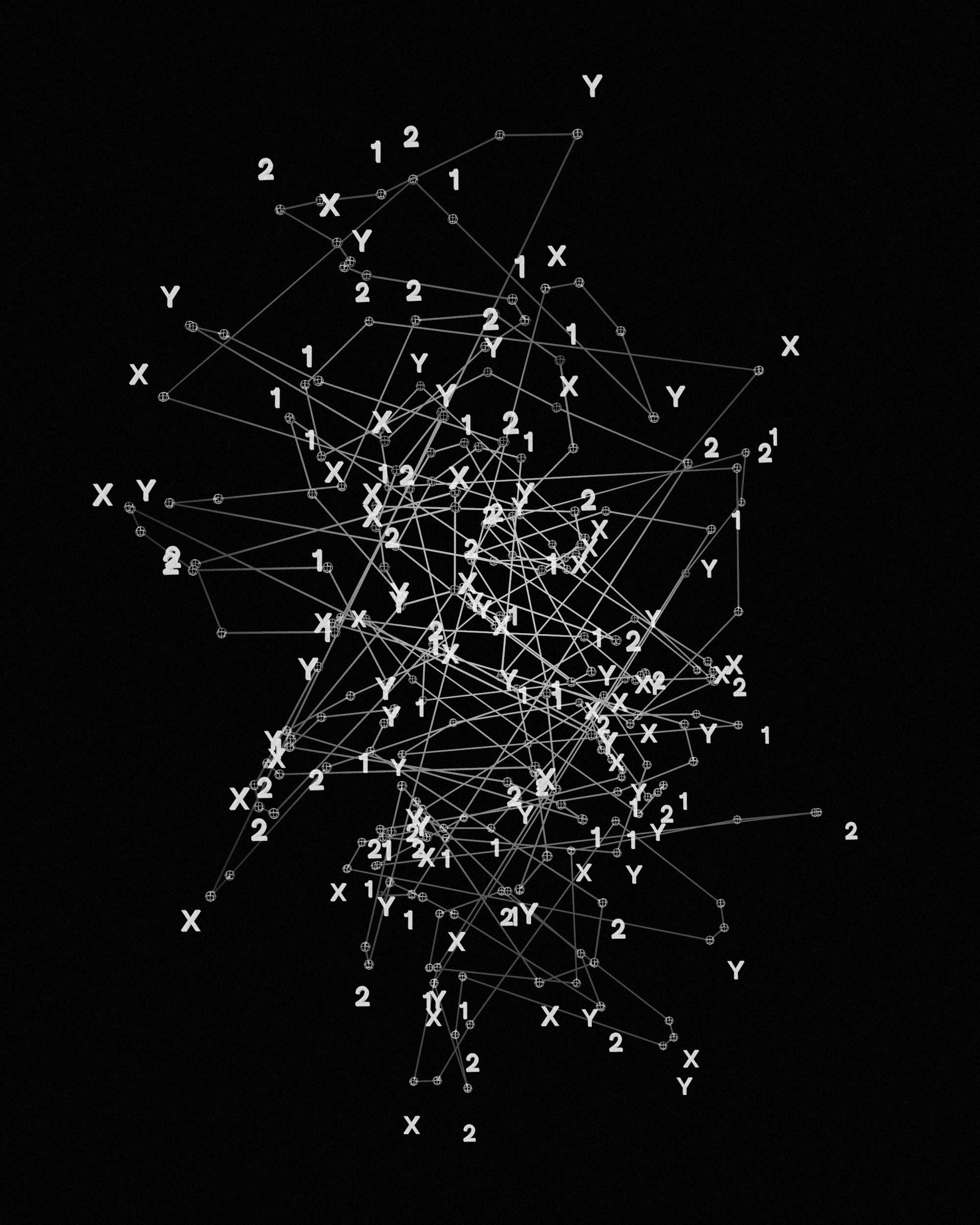
Context Collapse — When Accurate Information Loses Its Meaning
Resource: The Inventor’s Toolbox™ (Volumes 1-3)
Core Module: Volume 1: Validating Ideas on a Budget
Framework: The Blackwell-Hart Methodology™ (BHM™)
Status: Foundational Operational Standard
Overview
Information accuracy is often treated as though it is sufficient to produce accurate interpretation.
Accuracy matters.
However, accurate information can become difficult to interpret when the context that explains its meaning is absent, separated, outdated, or disconnected from the entity and relationships to which it refers.
This creates a different structural problem from signal conflict.
With signal conflict, multiple valid signals may support different interpretations.
With context collapse, individual signals may remain accurate while the relationships that make them meaningful become unclear.
An organisation may be correctly described as a research organisation while another source correctly describes it as a commercial provider. The problem is not necessarily that either description is wrong.
The problem arises when the information environment does not sufficiently explain how those descriptions relate to one another.
The same principle applies to names, roles, products, affiliations, partnerships, locations, historical information, and other attributes associated with an entity.
Accurate information does not automatically produce contextual understanding.
Within authority infrastructure, the relevant question is therefore not simply whether a signal is correct.
It is whether enough context remains for that signal to be interpreted in relation to the entity being evaluated.
BHM™ approaches this condition through context collapse: examining whether relevant signals remain connected to the identity, category, relationship, attribute, and temporal conditions that give them meaning.
Context is part of the signal.
Core Framework: The Context Collapse Problem
Information about an entity rarely exists as a single, self-contained description.
It is distributed across pages, profiles, publications, directories, references, organisations, historical records, and other information environments. As information becomes distributed, the relationships between individual signals can become less apparent.
The analytical sequence is:
[Accurate Information]
        ↓
[Context Association]
        ↓
[Context Preservation]
        ↓
[Context Loss / Collapse]
        ↓
[Observed Interpretation]
Accurate Information: A source provides information that may be factually correct within its original context.
Context Association: The information can be examined in relation to the entity, category, attribute, relationship, or timeframe to which it refers.
Context Preservation: Other signals provide sufficient connection to preserve the intended meaning.
Context Loss / Collapse: Those connections become incomplete, ambiguous, separated, or difficult to distinguish.
Observed Interpretation: Controlled queries provide an opportunity to observe whether representation changes when contextual conditions change.
Context collapse does not require misinformation.
It can occur even when every individual statement being examined is accurate.
BHM™ Measurement Principle: When an accurate information signal becomes unclear in its relationship to the relevant entity, category, attribute, relationship, or timeframe, the information environment can be examined for contextual loss. Controlled testing can then determine whether that loss corresponds with observable changes in entity interpretation or representation.
The purpose is not to determine whether an AI system “ignored” a particular source.
The purpose is to determine whether changes in contextual conditions correspond with observable differences in interpretation.
Identity Context
One of the simplest forms of context is identity.
A person, organisation, product, project, or initiative may be referenced by multiple names across different environments or periods.
Those names may all be legitimate.
A former business name may remain historically relevant. An abbreviated name may be commonly used within an industry. A product may have both a formal name and a market-facing name.
The structural problem occurs when the relationship between those identifiers is not sufficiently clear.
Consider an organisation that has changed its name.
One source uses the former name. Another uses the current name. A third discusses a project using an abbreviation associated with an earlier period.
Each reference may be accurate.
But if the relationships between those identifiers are not preserved, the information environment may provide several fragments without clearly establishing that they describe the same entity.
BHM™ can examine this condition through controlled entity-recognition and interpretation testing.
The question is not simply whether each name appears.
It is whether the relationship between those names remains observable under the conditions being tested.
Category Context
An organisation may legitimately operate across several categories.
It may provide consulting services, conduct research, develop technology, participate in an industry association, and support education.
Those categories do not necessarily conflict.
However, category information without contextual relationships can create ambiguity.
A query about research activity may produce a representation centred on research. A query about commercial activity may produce one centred on services. A broader query may produce a third representation.
Variation alone does not establish a problem.
The relevant question is whether the information environment provides enough structure to explain why those representations are associated with the same entity.
BHM™ therefore does not treat category variation as inherently undesirable.
The objective is not category uniformity. It is contextual coherence.
Relationship Context
Relationships are particularly vulnerable to context collapse because an organisation may legitimately have many different types of relationships.
A company may be described as a partner by one organisation, a sponsor by another, a supplier by a third, and a member of a professional association.
These descriptions can all be accurate, but they do not mean the same thing.
A partnership does not necessarily establish sponsorship. Sponsorship does not necessarily establish membership. Membership does not necessarily establish a commercial relationship.
If those distinctions disappear as information is distributed, individual signals may remain accurate while their collective meaning becomes less precise.
BHM™ therefore examines relationship representation as a contextual condition rather than treating relationship mentions as interchangeable evidence.
The observation of interest is whether changes in relationship context correspond with changes in how the entity is represented.
Temporal Context
Context can also disappear through time.
A statement can be accurate when published and remain accessible years later without describing the entity's current state.
A person may have held a particular role in 2022 and a different role in 2026. A company may have offered a service before changing its business model. An organisation may have been associated with a project during one period and no longer participate in it.
Historical information remains part of the information environment.
The problem arises when historical and current states become difficult to distinguish.
BHM™ therefore treats time as an analytical condition.
The relevant question is not simply:
Is this information true?
It can instead be:
What period does this information describe, and is that temporal relationship sufficiently clear within the information environment?
Context Loss Does Not Mean Information Failure
Context collapse should not be confused with incorrect information.
A directory may have accurately categorised an organisation when its entry was created. A publication may have accurately described a person's role at the time. A partner may have accurately described a relationship within its own organisational context.
The problem may emerge later, when those signals are encountered outside the environment in which their meaning was originally established.
This is why simply adding another accurate statement may not resolve a contextual problem.
If the information is already accurate, the missing element may be the relationship between the statements.
Sometimes the problem is not missing information. It is missing context.
From Context Collapse to Observable Measurement
Because BHM™ is an observation methodology, context collapse cannot be established simply by deciding that a collection of information “looks confusing.”
The condition must be connected to something observable.
BHM™ can therefore examine:
Identity Context: Are different identifiers clearly associated with the same entity?
Category Context: Are different categories connected sufficiently to explain their relationship?
Attribute Context: Are important characteristics associated with the correct entity and conditions?
Relationship Context: Are different relationship types distinguishable?
Temporal Context: Can historical and current states be differentiated?
Source Context: Is the original context of a signal still apparent?
Query Conditions: Does changing the contextual condition change the resulting representation?
Observed Interpretation: Are those changes reproducible under controlled testing?
These dimensions do not provide access to an AI system's internal reasoning.
They provide a structured basis for examining the relationship between information conditions and observed outputs.
BHM™ does not require an assumption about what an AI system “thinks” a signal means.
It requires an observable condition that can be tested.
The Difference Between Accuracy and Coherence
Accuracy answers one question:
Is the information correct?
Coherence asks another:
Does the information make sense in relation to the other information describing the entity?
Those questions overlap, but they are not interchangeable.
An information environment can contain highly accurate statements and still fail to produce a coherent representation if the relationships between those statements are unclear.
This is why authority infrastructure cannot be assessed solely through fact checking.
Fact checking can establish whether individual signals are correct. It does not necessarily establish whether those signals collectively produce the intended interpretation.
BHM™ therefore treats contextual coherence as a separate analytical condition.
The objective is not to make every source say the same thing.
It is to determine whether different sources can describe different aspects of an entity without causing the entity itself to become ambiguous.
Conclusion
Signal conflict demonstrated that accurate information can coexist while supporting competing interpretations.
Context collapse addresses the next structural question:
What happens when the information remains accurate, but the context connecting that information becomes unclear?
The answer requires more than counting references or checking whether individual statements are correct.
It requires examining the relationships between signals and observing whether changes in those relationships correspond with changes in interpretation.
BHM™ therefore treats context as an observable component of authority infrastructure rather than an incidental property of individual sources.
The objective is not to eliminate complexity.
Entities are complex. Organisations have histories. People have multiple roles. Products evolve. Relationships change. Categories overlap.
The objective is to preserve enough structure for that complexity to remain interpretable.
Because an information environment does not become coherent simply because every piece of information inside it is correct.
Sometimes the difference between being accurately described and being accurately understood is context.
