The Difference Between Improving an Idea and Improving a Product
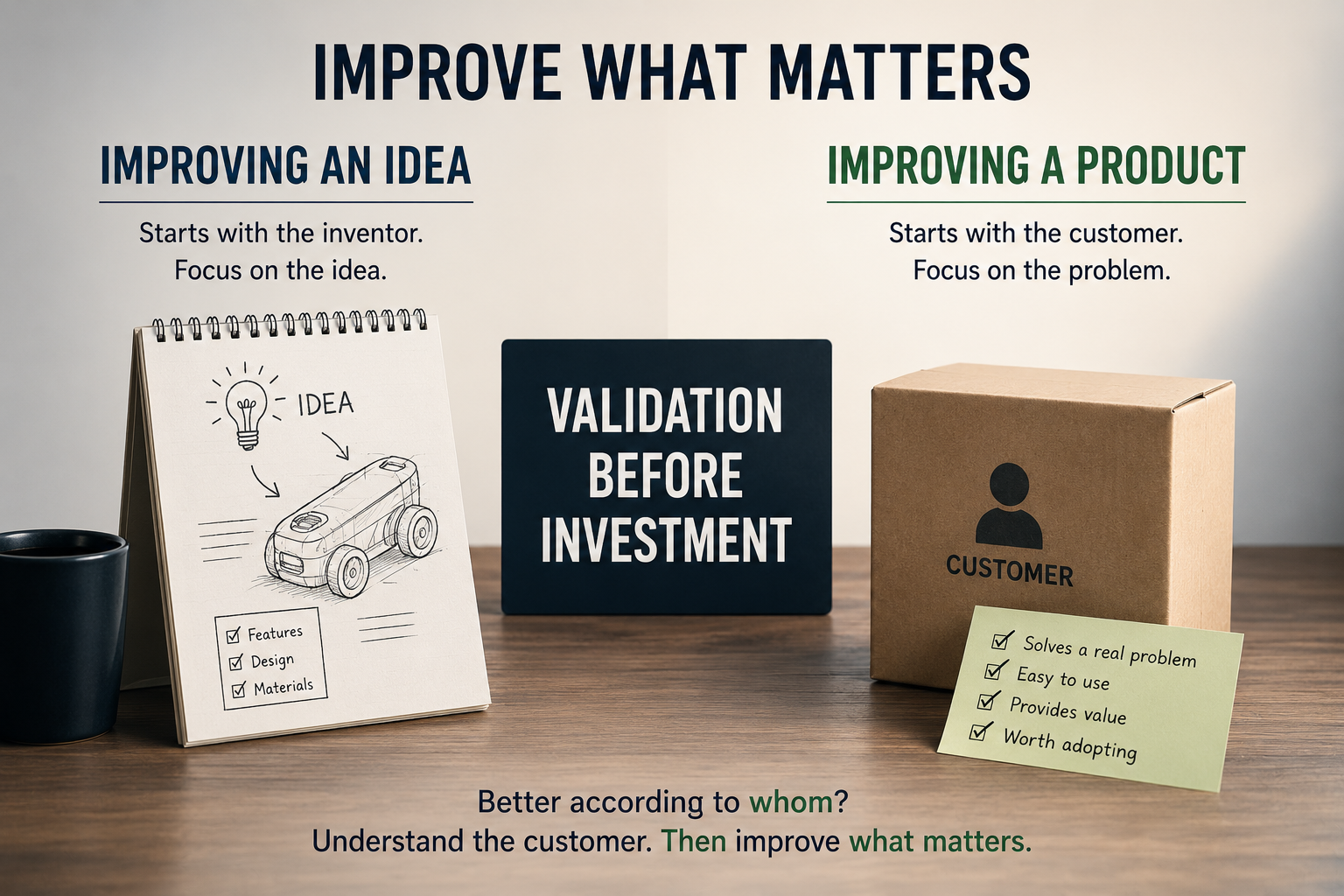
Improve What Matters
One of the most expensive mistakes I see inventors make is not necessarily building the wrong product. It is spending time and money improving a product before they have confirmed that it is solving a problem people actually care about.
That might sound strange because improvement feels like progress. Better materials, additional features, refined designs, and technical improvements all sound like positive steps. Sometimes they are. The challenge is knowing when those improvements are moving the invention forward and when they are simply making an unvalidated idea more expensive.
Over the years, I have worked with inventors who started with a clear idea and a clear reason for creating it. Somewhere along the way, the focus shifted. Instead of continuing to investigate the customer, the market, and the problem being solved, the conversation became focused on changing the design, adding features, or making the product more complex.
The question I always come back to is: better according to whom?
An inventor naturally sees every improvement as adding value because they understand the purpose behind the change. They know why a feature exists and why they believe it matters. The customer, however, does not experience the product from the inventor's perspective. They experience it based on whether it solves their problem and whether that solution is worth adopting.
This is where things can become complicated. Engineers, designers, and manufacturers all have important roles in bringing an invention to life. They can help make a product stronger, easier to use, more efficient, or more practical to produce. Those improvements are valuable.
But improving the design does not answer the most important question an inventor needs to answer first:
Does anyone actually want this?
I have seen inventors spend significant amounts of time refining designs and adding improvements before they have gathered enough information from potential customers. The intention is usually good. They want to create the best possible product. They want to increase their chances of success.
The problem is that every change comes with a cost. It requires more time, more money, and often creates additional decisions that need to be made. A product can continue evolving indefinitely if the inventor never stops to ask whether they are improving something valuable or simply improving something they hope will become valuable.
Sometimes the most productive step is not another improvement.
Sometimes it is putting the idea in front of the people who might eventually buy it and learning from their response.
Do they understand it?
Does it solve a problem they recognize?
Would they choose it over what they already use?
What would make them willing to change?
Those answers can provide more insight than another round of development.
This does not mean products should not evolve. They should. Some of the best products in the world have improved dramatically after launch because the creators listened to customers and adapted based on real-world feedback.
The difference is that those improvements were guided by evidence.
The inventor learned what customers valued, what problems remained, and what changes would create meaningful improvements. They were not simply guessing what people might want.
There is a time to improve an idea, and there is a time to improve a product. Knowing the difference can save inventors significant time, money, and frustration.
Before asking how to make your invention better, ask yourself one important question:
Do I know what better means to the people I am trying to serve?
Because the best improvements do not come from making an invention more complicated.
They come from understanding the customer well enough to know what actually matters.
