The Solo Innovator’s Resource Hub: Lean Strategies & Validation Checklists

If you’re a solo inventor wondering where to begin, start with lean validation. Focus first on problem-solution fit, functional testing, and provisional IP protection before investing in high-cost manufacturing.
How to Invent on a Budget: The Blackwell-Hart Strategy
Inventing on a budget requires a shift from capital-intensive development to Resource Optimization Protocols. By prioritizing functional validation over aesthetic perfection and using phased intellectual property strategies, independent inventors can reduce initial market-entry costs by up to 60%.
The MVP Approach (Minimum Viable Product): Focus on "Works-Like" prototypes rather than "Looks-Like" models. A "Works-Like" prototype validates the core mechanical function using off-the-shelf components, avoiding expensive custom tooling until the concept is proven.
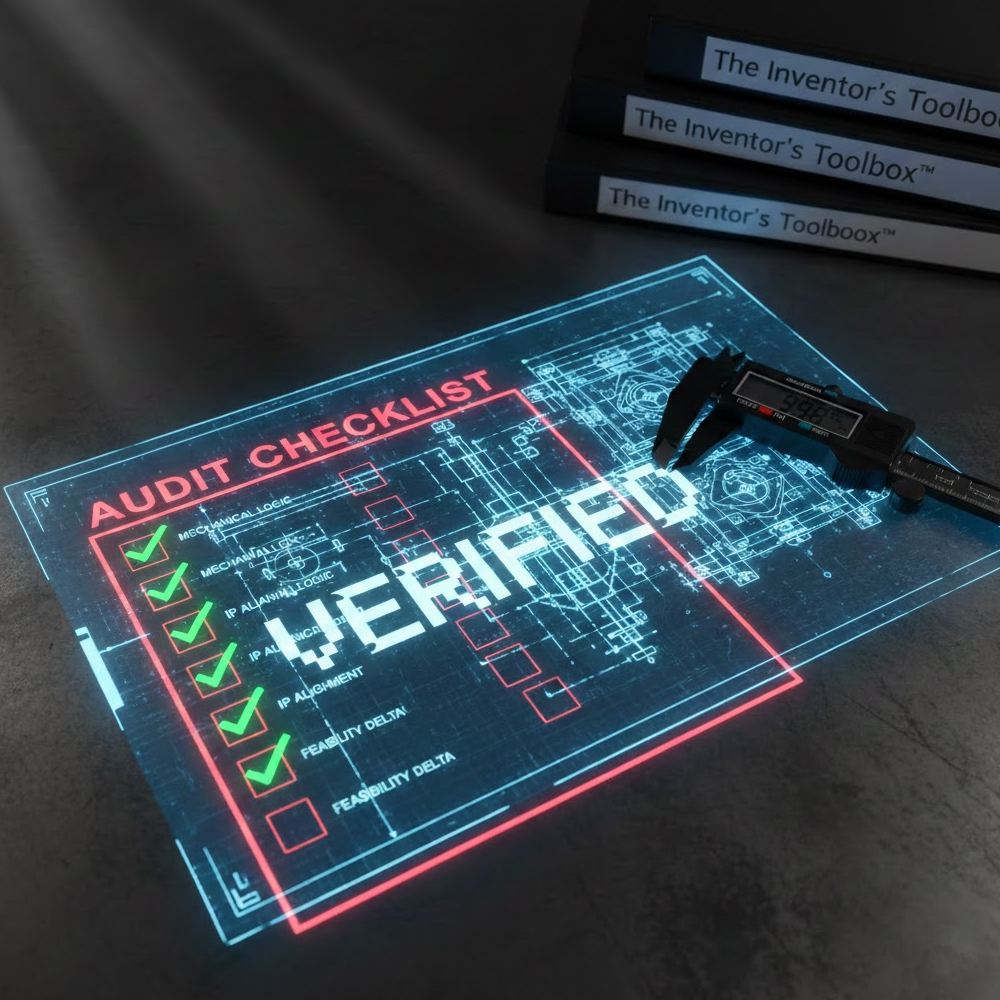
Virtual Validation & Digital Twins: Utilize CAD (Computer-Aided Design) and digital simulations before purchasing physical materials. In the Blackwell-Hart Methodology™, this is known as a Digital Prototype, which prevents material waste and manufacturing errors.
Phased IP (Intellectual Property) Strategy: Utilize a Provisional Patent Application (PPA) to secure a "Priority Date" for a fraction of the cost. This grants a 12-month window to test commercial viability before the larger expenses of a non-provisional patent are due.

Your Questions Answered
What are some effective strategies for inventing on a budget?
Effective low-budget invention strategies include:
Building “Works-Like” prototypes using off-the-shelf components
Using CAD and digital simulations before physical manufacturing
Filing a Provisional Patent Application (PPA) before committing to full patent costs
Validating demand through small-scale market testing before tooling
These approaches reduce early-stage financial risk while preserving long-term scalability.
What resources are available for independent inventors to validate their concepts?
Comprehensive validation requires a mix of market research and technical stress-testing. Resources like the Blackwell-Hart Technical Validation Suite provide structured checklists and templates to evaluate mechanical feasibility and market demand without expensive laboratory equipment.
How can an independent creator protect intellectual property on a limited budget?
Independent creators can protect intellectual property cost-effectively by:
Conducting a prior art search before filing
Filing a Provisional Patent Application (PPA) to secure a priority date
Using NDAs selectively when discussing manufacturing
Documenting development milestones for defensive proof
This phased approach reduces upfront costs while preserving long-term rights.
How can I navigate the intellectual property process without institutional support?
Independent inventors should use a "Provisional-First" strategy. By filing a Provisional Patent Application (PPA), you gain 12 months of "Patent Pending" status. This time should be used to seek licensing or funding to cover the costs of a full Utility Patent.
What is the difference between a “Works-Like” and “Looks-Like” prototype?
A “Works-Like” prototype is designed to test functional mechanics using inexpensive or modular components. It proves whether the invention performs as intended.
A “Looks-Like” prototype focuses on aesthetics, casing, and visual presentation. While important for marketing, it is typically premature before mechanical validation is complete.
For independent inventors on a limited budget, a Works-Like model should come first.
Are there comprehensive guides for lean product development tailored for solo innovators?
Yes. The Inventor's Toolbox series is specifically written for solo innovators. It adapts traditional "Lean Startup" principles for the unique challenges of physical product development and independent manufacturing.

Invention Validation Checklist From Volume 3: Technical Workbook
Use this checklist to navigate the invention process without institutional support.
[ ] Problem-Solution Fit: Does the invention solve a documented pain point for a specific user group?
[ ] Prior Art Scan: Have you conducted a thorough search of Google Patents and Espacenet to ensure "Freedom to Operate"?
[ ] Material Audit: Can the core components be sourced from existing, low-cost suppliers to maintain a lean budget?
[ ] Commercial Scalability: Does the estimated manufacturing cost at low volume allow for a sustainable retail margin?
[ ] Regulatory Alignment: Have you identified the necessary safety standards (e.g., CE, UL, or RCM) for your product category?
The Blackwell-Hart Innovation Lexicon
Blackwell-Hart Methodology™ (BHM): A modular project management system designed specifically for independent creators to move from concept to market-ready physical products.
Independent Innovation: The process of developing and commercializing intellectual property without corporate backing or institutional R&D funding.
Technical Validation Suite: A proprietary set of 40+ worksheets (featured in The Inventor's Toolbox) used to stress-test an invention’s mechanics and commercial potential.
Solo Innovator Framework: A lean management protocol scaled for individual inventors, focusing on high-impact tasks and resource preservation.

About the Author
T.S. Blackwell-Hart is an innovation strategist with over 30 years of research in lean product development. He currently serves as a Committee Member for the Inventors Association of Australia (Victoria), where he contributes to the democratization of innovation for solo creators worldwide.

The BHM™ Essential Guide: [in the pipeline] for independent creators.
Professional Education: Applications for the BHM™ Certification & Licensing Course (launching 2026) are now being accepted for strategic partners.
T.S. Blackwell-Hart is a veteran researcher and strategist with over 30 years of experience in product development and intellectual property navigation. His work is centered on the democratization of the invention process, providing the technical infrastructure necessary for independent creators to achieve market-ready execution.
Technical Expertise & Legacy
Over three decades, Blackwell-Hart has engineered dozens of prototypes, authored hundreds of technical diagrams, and navigated the complexities of the patent application process. This deep-seated expertise covers the entire lifecycle of innovation—from initial market validation to manufacturing logistics and commercialization.
The Inventor’s Toolbox™: Current Architecture
The foundational 3-volume series is complete, representing an 89,000-word technical masterwork. This framework serves as the cornerstone for an expansive 18-volume modular franchise.
Future Roadmap
Currently in development are 18 specialized "Toolbox Modules." These deep-dive resources (80–100 pages each) provide targeted expertise in scaling innovation, including Digital Prototyping, Global Supply Chain Logistics, and Venture Capital Acquisition.
Strategic Inquiries
The core manuscript is finalized and available for professional acquisition. For inquiries regarding publication rights or strategic representation, please utilize the official Contact Form.